

How to Catch a Shark from the Beach: Beginner to Overnight
Every shark we put on the sand starts the same way: a fresh bait sitting past the second sandbar, a rod bent into a spike, and a stretch of waiting that ends in ten seconds of chaos. People ask us how to catch a shark from the beach every single week, on the sand, on YouTube, in our messages. The honest answer is that it takes four things done right: legal paperwork, gear that can take a beating, fresh local bait, and a plan for the fight before it happens. I'm Dylan Wier, and along with Blaine Kenny I run land-based shark trips out of Pensacola on Coastal Worldwide charters. This guide walks through the whole process, from your first blacktip on a sunset trip to a 12-hour overnight session waiting on something with shoulders.
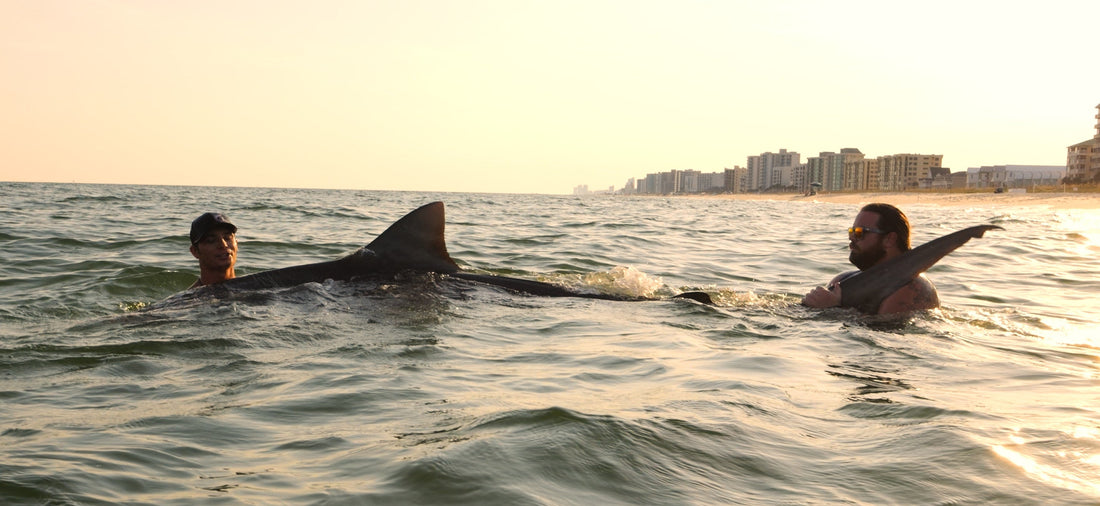
Table of Contents
- The Rules Come First
- The Gear List: Rods, Reels, and Leaders
- Bait: Fresh and Local Beats Everything
- The Short Version of How to Catch a Shark from the Beach
- Beginner Trip or Overnight: Picking Your Format
- After Dark: How to Catch a Shark from the Beach at Night
- The Fight and the Release
- The Night the Big One Showed Up
- Seven Mistakes That Cost People Sharks
- FAQ
The Rules Come First
Florida takes shore-based shark fishing seriously, and so do we. Before a bait ever hits the water, get square with the FWC. Anglers 16 and older need a Florida saltwater fishing license, plus the no-cost Shore-based Shark Fishing permit. The permit requires passing FWC's free online Shark-Smart course, and both renew annually. You can find the course and full regulations at myfwc.com.
A few rules trip people up, so read these twice. Non-offset, non-stainless-steel circle hooks are required any time you target sharks with natural bait. You must carry a device that can cut the leader or hook fast. Chumming from the beach is prohibited for any species. Certain sharks are protected in Florida and can never be targeted or kept, including great whites, every hammerhead species, tigers, lemons, duskies, sandbars, and sand tigers. Those fish stay in the wash and get released without leaving the water. We wrote a full breakdown in our Florida shark fishing regulations guide if you want every detail.
One more that surprises people: the shore-based permit also applies if you fish from the beach for anything using a metal leader longer than 4 feet, a fighting belt, or baits deployed by kayak with large hooks. That describes most serious surf setups, so assume you need it.
The Gear List: Rods, Reels, and Leaders
Beach shark fishing punishes weak gear. A big Gulf shark will dump 300 yards of line on its first run, and the surf adds drag the whole time. Our standard setup looks like this:
- Reel: We fish Okuma Makaira LBS reels, a lever drag we co-designed with Okuma for land-based shark fishing. Smooth drag matters more than anything else on this list.
- Rod: A heavy surf or stand-up rod with the backbone to lift a fish through the outer bar. Length matters less than strength when baits go out by other means than casting.
- Main line: 65 to 100 lb braid, topped with a mono shock section.
- Leader: A long heavy mono rub section into a wire bite section with a non-offset circle hook. We run Terra Firma Tackle Leaders on every trip, the same leaders we build and sell, because a chewed-through leader is the most common way to lose a fish.
- Extras: A rod spike, a fighting belt, pliers, a leader cutter, gloves, and a tape measure. Headlamps with red light for night sessions.
You can piece a workable setup together for less than most people expect. The reel and the leader are the two places not to save money.
Bait: Fresh and Local Beats Everything
Sharks in the surf zone eat what lives in the surf zone. Fresh bonito, mullet, ladyfish, and jack crevalle out-fish anything frozen from a shop. A half bonito soaked in the trough behind the bar will get eaten most summer nights on our beaches. Match your bait size to your target: palm-sized chunks for blacktips and sharpnose, big slabs for bulls. I broke down our exact picks, rigging included, in our best bait for shark fishing guide.
The Short Version of How to Catch a Shark from the Beach
Strip away the details and the process runs the same on every trip we guide:
- Pick your water. Look for deeper troughs, cuts through the sandbar, and structure that funnels bait. Sharks patrol edges. Our Pensacola shore fishing guide covers the stretches we fish most.
- Set up in daylight. Rig leaders, stage baits, and set your spikes before the sun drops. Fumbling with wire in the dark costs fish and fingers.
- Deploy baits past the bar. Casting works for smaller species close in. Bigger baits go out deeper, which on our trips means we handle the deployment while you stay dry on the sand.
- Set the drag light and wait. A shark should be able to take line without feeling the rod. The clicker screaming is your alarm.
- Let the circle hook work. No dramatic swing. Push the drag up, let the line come tight, and lean back. Circle hooks find the corner of the jaw on their own.
- Fight from dry sand. Feet planted, rod low, pump and reel. The angler stays on the beach the entire time. No boat, no wading out to it.
- Release fast. Leader off or cut, a quick photo in the shallows for legal species, and the fish swims off. We practice safe catch and release shark fishing for conservation on every single trip.
Beginner Trip or Overnight: Picking Your Format
The biggest variable in this sport is time on the sand. Shark fishing rewards hours, and the bite windows shift with tide, season, and bait movement. This is roughly the way our trip formats shake out:
| Trip | Best for | Prime window | Typical targets |
|---|---|---|---|
| 6-hour | First-timers and families | Afternoon into sunset | Blacktips, sharpnose, bonnetheads |
| 8-hour | Anglers wanting the dusk bite | Sunset into full dark | Blacktips, spinners, bulls |
| 12-hour overnight | Big-fish hunters | Dark to dawn | Bulls and the biggest surprises |
Beginners land sharks on short trips all the time. Kids do too. The species run smaller in daylight, and that is exactly the point: a 4-foot blacktip in the wash is the perfect first shark, and the fight still pulls harder than anything most people have hooked in their lives.
After Dark: How to Catch a Shark from the Beach at Night
Serious size shows up after sunset. Big sharks push shallow at night to hunt the trough, sometimes in water that barely covers their backs. The gear stays the same, the baits get bigger, and the waiting gets quieter. Red headlamps keep your night vision and keep the beach dark. Rod spikes get checked twice, drags get checked three times, and the crew rotates so somebody is always within reach of the rods. Our night shark fishing post digs into the science of the after-dark bite, and our overnight trips are built around it.
The mental game changes at 2 a.m. A clicker going off in total darkness, with a heavy fish peeling line toward the second bar, will wake you up faster than any alarm ever made. That moment is the reason people book the long trips.
The Fight and the Release
A land-based shark fight is a tug of war you win with patience. Keep the rod low, keep pressure steady, and gain line when the fish gives it. Getting a shark through the surf takes timing: let the waves push the fish, lift as the water recedes, and slide the fish into the skinny wash. From there the clock starts. Leader control, hook out or leader cut close, measurement if we need one, a fast photo for legal species, and the fish points back to deep water. Bulls, blacktips, and spinners handle the process well. Protected species never leave the water at all. Our safety and release guide covers the handling details step by step.
The Night the Big One Showed Up
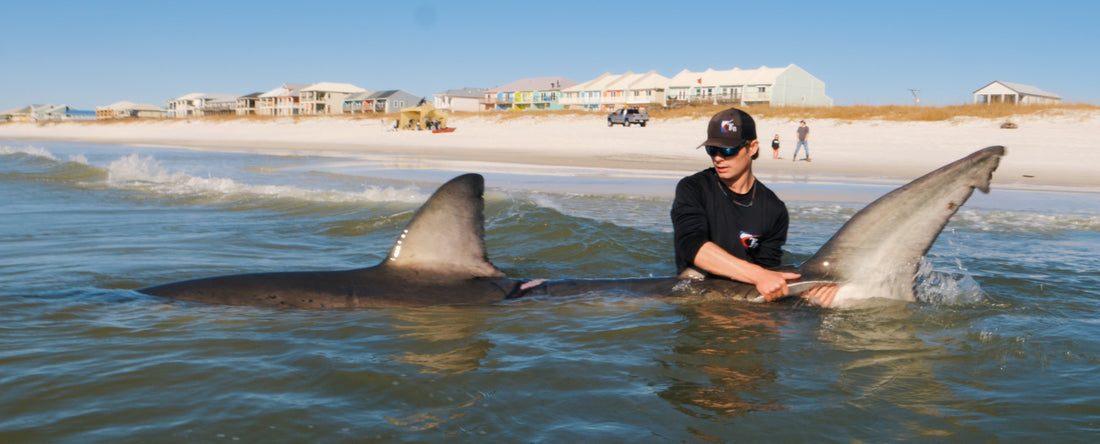
In January 2026 everything in this guide got tested at once. Blaine and I were running a winter session on Pensacola Beach with big baits soaking past the bar. The run started slow, then the fish understood what was happening and the fight turned into hours. The shark that finally came into the wash was a great white, taped at 13 feet 6 inches, with researchers later estimating the fish at 1,800 pounds. Great whites are fully protected, so the fish stayed in the water the whole time, got measured and documented in the wash, and swam off strong. The full story is in our great white write-up, and the footage lives on our YouTube channel, @CoastalWorldwide1.
That fish proved the point we make on every trip: the biggest sharks in the Gulf swim within casting distance of dry sand. You do not need a boat. You need preparation, patience, and respect for the animal.
Seven Mistakes That Cost People Sharks
Blaine and I watch the same errors sink trips up and down this coast every summer. Skip these and you are ahead of most anglers on the beach:
- Old bait. Frozen, refrozen, washed-out bait gets ignored while a fresh bonito chunk 50 yards away gets destroyed. Catch or buy bait the day you fish.
- Drag set too tight. A shark that feels resistance on the pickup drops the bait. Free spool with a clicker, or the lightest drag that holds bottom.
- Cheap leaders. Braid does not survive shark skin, let alone teeth. A proper rub section and bite section is the whole game, and losing a fish of a lifetime to a bargain leader stings for years.
- Fishing the wrong water. A pretty stretch of beach with no trough, no cut, and no bait is a dead zone. Ten minutes of reading the water beats three hours of blind soaking.
- No plan for the endgame. The fight ends with a wild animal in shallow water. Decide before the hookup who handles the leader, who takes the photo, and who keeps the crowd back.
- Slow releases. Sharks fight to exhaustion. Every extra minute in the wash lowers the odds that fish swims off strong. Cut the leader close if the hook is deep and let it go.
- Ignoring the rules. Fishing without the shore-based permit, using the wrong hooks, or dragging a protected species onto dry sand can end in fines and a damaged fishery. The rules keep beaches open for all of us.
Most of this list comes down to preparation. The sharks are there. On summer nights they patrol the same troughs people wade through at noon. Preparation is the difference between watching rods and fighting fish, and it is the single biggest thing a guided trip buys you. For a deeper cut of field-tested advice, our 21 shark fishing tips post collects two decades of combined lessons in one place.
FAQ
Do I need a license to catch sharks from the beach in Florida?
Anglers 16 and older need a Florida saltwater fishing license plus the free FWC Shore-based Shark Fishing permit, which requires a short online course. Both renew annually. Details are at myfwc.com.
Can a complete beginner land a shark from the beach?
Yes. Blacktips and sharpnose sharks in the 3-to-5-foot range are common on daylight trips, and the guide handles rigging and bait deployment. Beginners and kids fight fish from dry sand with the rod in a belt.
Do you need a boat to catch big sharks?
No. Every fish on our trips is hooked, fought, and released from the sand. Land-based shark fishing puts baits in the same troughs where big sharks hunt at night. Our beach vs boat comparison breaks down the difference.
Can you keep a shark caught from the beach?
Florida allows harvest of certain species with size and bag limits, and prohibits others entirely. We practice safe catch and release shark fishing for conservation, so every shark on a Coastal Worldwide trip goes back.
Is night fishing better for sharks?
Generally, yes. Bigger sharks move shallow after dark to feed, which is the reason our 12-hour overnight trips produce the largest fish of the year.
Ready to Skip the Learning Curve?
You can spend a year collecting gear and learning the water, or you can stand on the sand with us this month while a clicker starts screaming. Blaine and I run beach shark fishing trips in Pensacola from short family sessions to full overnights, with every piece of gear provided. Reach out here and we'll get you on the sand.