

Night Shark Fishing from the Beach: Why After-Dark Trips Land Bigger Sharks
Most people picture shark fishing as a midday thing. Sun overhead, rods in the sand, a cooler and a sunburn. That works, and we run plenty of daytime trips. But if you ask Blaine or me when the beach gets serious, we both say the same thing: after the sun drops. Night shark fishing from the beach is where the bigger fish show up, the crowds disappear, and the whole stretch of sand turns into our living room. This is a look at why that happens, what we change when the light goes, and what a night of beach shark fishing trips in Pensacola with Coastal Worldwide feels like.
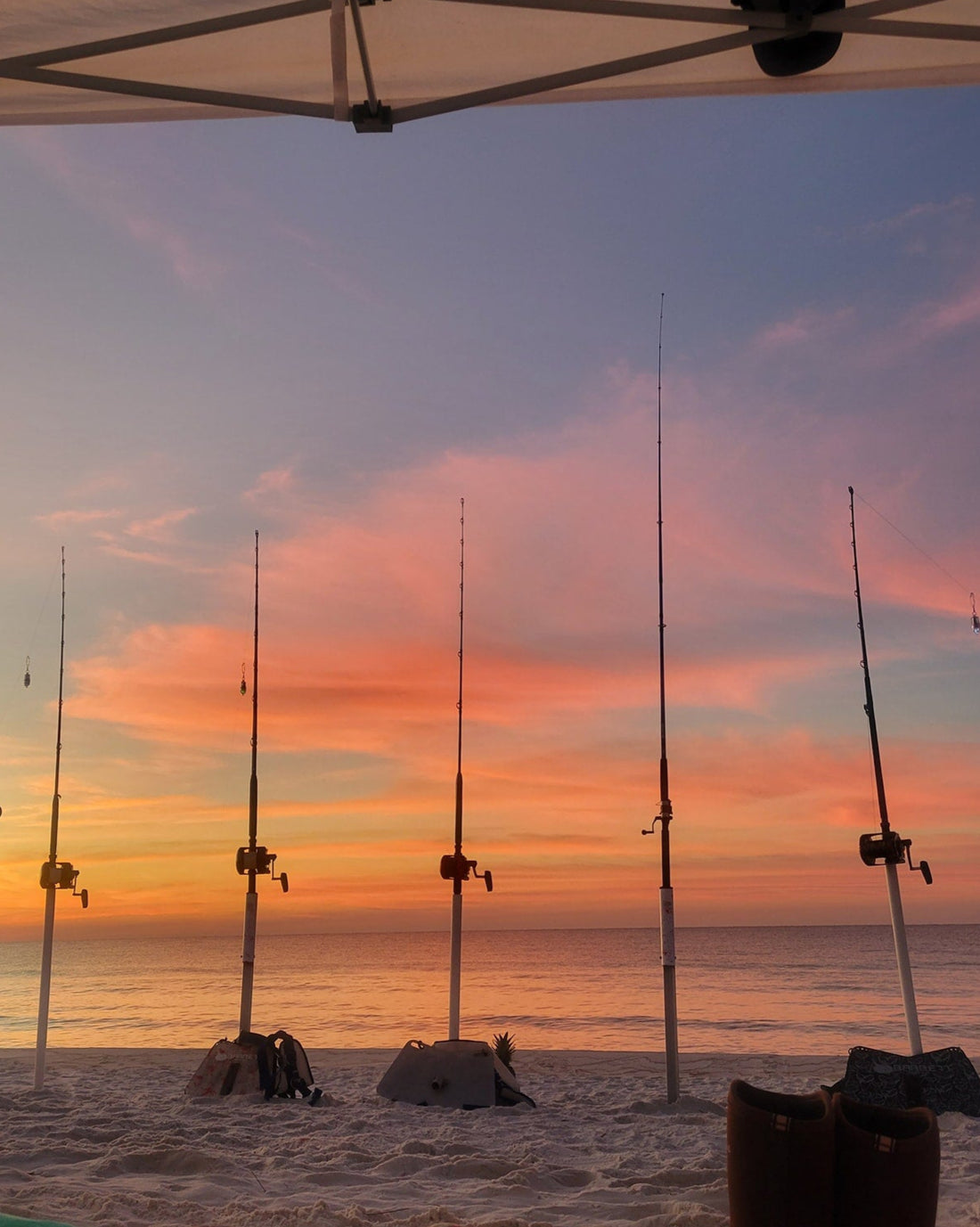
Night Shark Fishing from the Beach Rewards Patience
The science on shark feeding is messier than the campfire version. Despite what you hear, sharks do not flip a switch at sundown and start hunting. A lot of the species we deal with are crepuscular, meaning they get most active around dawn and dusk. That low-light window is the sweet spot. The sun comes off the water, the surf cools a few degrees, baitfish push toward shore, and the predators follow them right into the trough we are casting into.
Darkness gives the shark an edge, and that is the part that works in our favor. A big bull or blacktip can move into knee-deep water without being seen. It hunts by smell and by feel in the dark, which is the exact reason a well-placed cut bait soaking in the wash gets hammered after sunset. You are not fighting the shark's caution anymore. You are fishing when it feels safe to come shallow. That confidence is what puts a rod-bending fish on your line while the daytime crowd is back at the hotel.
Patience is the price of admission. A night sit might be quiet for an hour, then three reels scream inside ten minutes. We tell first-timers to settle in, watch the rod tips, and trust the soak. The beach rewards the people who wait it out.
The Sharks That Move In After Sunset
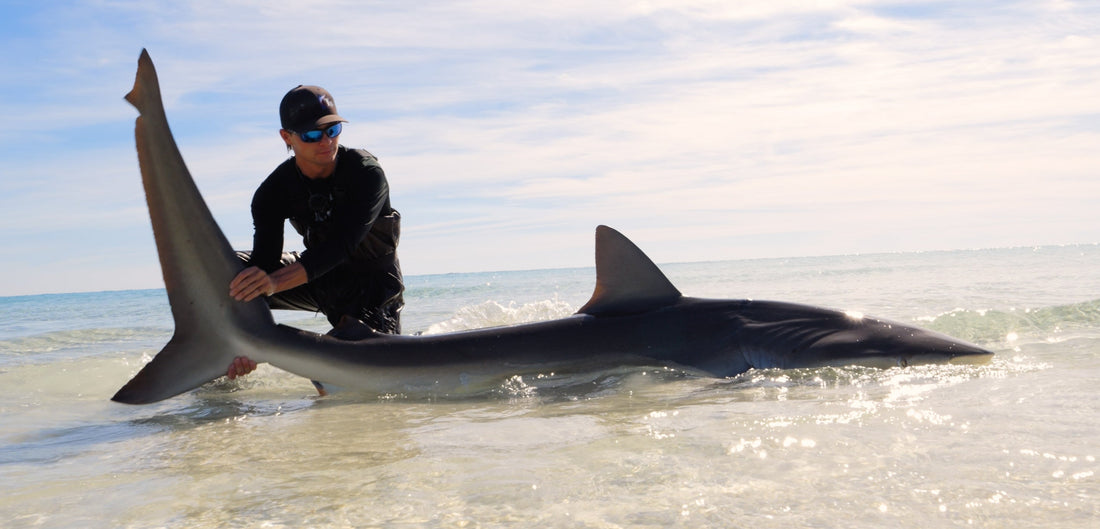
The cast of characters at night is the same crew we see in daylight, only bolder and closer. Bull sharks are the headliners. They are thick, mean, and built for the shallows, and they prowl the first sandbar after dark like they own it. Blacktips and spinners come through in fast, hard-hitting runs, and a spinner that cartwheels out of black water under a headlamp is a sight you do not forget. Atlantic sharpnose, our smaller, scrappy locals, keep the action steady between the big bites and are perfect for kids learning the ropes.
We also hook protected species at night, and that changes how we work. Hammerheads, tigers, lemons, and sandbars are off limits in Florida. They cannot be targeted or removed from the water, so when one of those grabs a bait, the fight ends in the wash. We keep the fish in the water with its gills covered, get the hook or the leader cut close, and send it back. We practice safe catch and release shark fishing for conservation, and that rule holds whether the sun is up or it is two in the morning.
For the full rundown of which sharks you can keep and which ones go straight back, our shark fishing safety and catch-and-release guide walks through the Florida rules in plain language.
Tides and the Moon Do Half the Work
Moving water is the trigger. A slack, dead tide can shut the beach down no matter how good the bait is, so we time our night sits around the tide changes when current is pushing through the trough. A rising tide after dark is our favorite. It floods the first bar, pulls baitfish up onto it, and brings the bigger sharks in behind them to feed in water you could wade in. We plan the trip length so the prime hours land on moving water, not against it.
The moon plays its own hand. A dark, new-moon night takes away the shark's sight, which leans the whole game toward scent and bottom-soaked cut bait, and that often means a better bite for us. A bright full moon flips it the other way. The sharks can hunt by eye, bait scatters, and the fish can get pickier. Neither is bad, you fish them differently. We read the calendar before we set the date and rig accordingly.
Gear We Change for Night Shark Fishing from the Beach
The tackle that hauls in a big shark does not change after dark. The Okuma Makaira LBS reels we helped Okuma design do the heavy lifting, loaded with the same 200 lb braid under a short 250 lb mono top shot, with our Terra Firma Tackle Leaders rigged for teeth and sandpaper skin. What changes is everything around the gear that helps you work in the black.
Light is the big one. We run battery rod-tip lights and glow sticks on every line so you can read a bite from fifty yards down the beach. Headlamps with a red mode keep your night vision intact and stop you from blinding the guy next to you. We stake reflective markers at the rods so nobody trips over a spread of lines in the dark. A solid lantern at base camp gives you a spot to re-rig, cut bait, and keep your hands working without fumbling.
We also slow the whole operation down. Kayaking a bait two hundred yards offshore takes more focus when the horizon disappears, so we run it methodical, with lights and a plan. Drag settings, knots, the gaff-free release setup, all of it gets checked twice before dark because fixing a problem by headlamp with a shark on the line is the hard way to learn.
Bait After Dark
Scent does the work at night, so we lean on fresh, strong-smelling cut bait. A fat chunk of bonito or a half of a freshly caught ladyfish puts a long scent trail down the trough, and the current carries it right to a shark hunting by its nose. Whole live baits still produce, but in the dark a big cut bait soaking on the bottom is hard to beat for the bulls.
Freshness matters more than size. A bait that has been sitting in the sun all day has lost most of what makes it work. We cut fresh through the night and refresh a bait that has been soaking too long with nothing to show for it. If you want the full breakdown on what we throw and how we rig it, our bait guide covers live versus cut for every situation.
Reading the Beach in the Dark
You cannot find structure once the sun is gone, so we scout in daylight. Before a night trip we walk the stretch and read the water at low tide, looking for the deepest part of the trough, the cuts between sandbars where current funnels through, and any drop-off close to shore. That darker blue gutter running parallel to the beach is the highway, and the cuts are the on-ramps the sharks use to move in and out with the tide.
Once it is dark, we are fishing spots we already marked. We drop baits on the edges of the trough and right in the mouth of a cut, where a hunting shark expects to find a meal getting swept past. Picking the spot in the light is half the reason our night trips produce. Guessing in the dark wastes the best hours, and those hours are too good to waste.
Staying Safe on a Black Beach
A shark on the sand is serious business in daylight and twice as serious in the dark. We control the landing zone, keep everyone clear of the leader, and handle the fish fast so it goes back strong. Nobody puts a hand near the business end without a reason, and the people on camera duty stand where we tell them. These animals deserve a clean release, and our crew goes home with all their fingers. That is the deal.
The legal side is simple and worth knowing before you come out. Anglers 16 and older need a Florida saltwater fishing license and the free shore-based shark permit, which you get by finishing FWC's online Shark-Smart course. We point every guest to it when they book so there are no surprises at the truck. Beyond that, we bring the gear, the knowledge, and the spot, and you bring a willingness to stay up past your bedtime.
A Typical Night on the Sand with Coastal Worldwide
Here is how most of our night trips run. We meet in the late afternoon and get the camp set while there is still light, rods staked, baits cut, kayak ready. The first hour after sunset is setup and anticipation. The beach empties out, the temperature drops into something comfortable, and the only sound is the surf and the click of a reel in free spool.
Then the beach goes to work. A rod tip lights up, the clicker starts to sing, and somebody is strapped into the harness before they are fully awake. There is nothing like watching a first-timer lean back against a fish they cannot see, feeling it surge in the dark, hearing the drag give ground. We coach them through it, guide the fish into the wash, get a couple of fast photos in the shallows, and slide it back into the black water where it belongs. Then we re-bait and do it again. Some nights the bite comes in waves. Some nights it is one giant fish that makes the whole trip. Either way, the people who stick it out leave with a story that beats anything they got in daylight.
If you want more of how we read a sit and work a spread, our 21 shark fishing tips from the beach cover the small details that put fish on the sand, day or night.
Fishing at night on your own? Start with the free Shark Fishing Academy at catchmoresharks.com. Safety, rigging, and reading a dark beach are all in there.
Book a Night Shark Fishing Trip in Pensacola
We run trips at three lengths, and the longer ones get you deeper into the best hours. A six-hour trip runs $1,200, an eight-hour trip is $1,500, and the twelve-hour trip at $2,100 lets you fish the full dusk-to-dark window and beyond. Every booking holds with a $200 deposit. We cap the group, bring all the heavy gear, and put you on the part of the beach that produces.
If a night on Pensacola Beach with rods in the sand and a big shark somewhere out in the dark sounds like your kind of trip, take a look at our beach shark fishing trips and then reach out to us to lock in a date. Bring a friend, bring a thermos, and let us handle the rest. The beach is a different place after dark, and we would love to show you.
