

How to Spool a Shark Fishing Reel: Okuma Makaira LBS Setup (or Let Us Spool It for You)
By Dylan Wier, Coastal Worldwide. Reviewed September 2026.
If you want to know how to spool a shark fishing reel the way a working beach crew does it, this is the whole process, in order, with the part nobody explains: tension. We spool Okuma Makaira SEa LBS reels at home before every trip, and every one of them gets the same line recipe. About 85 to 90 percent of the spool is 200 lb braid, topped with a short section of heavy monofilament. That setup has stopped bull sharks for first-timers and it is the setup on the reel that stopped our biggest great white shark. Below is how to load it yourself, and at the bottom, how to have us do it for you before your reel ships.
Quick framing. Coastal Worldwide is a land-based shark fishing charter. We fish from the sand, no boat, on the Gulf Coast from Pensacola to Fort Morgan. The Makaira SEa LBS line was designed with input from Dylan Wier and Blaine Kenny, and it is field-tested by Coastal Worldwide on every trip we run. Everything below is what we do with our own reels, not a summary of somebody else's manual.
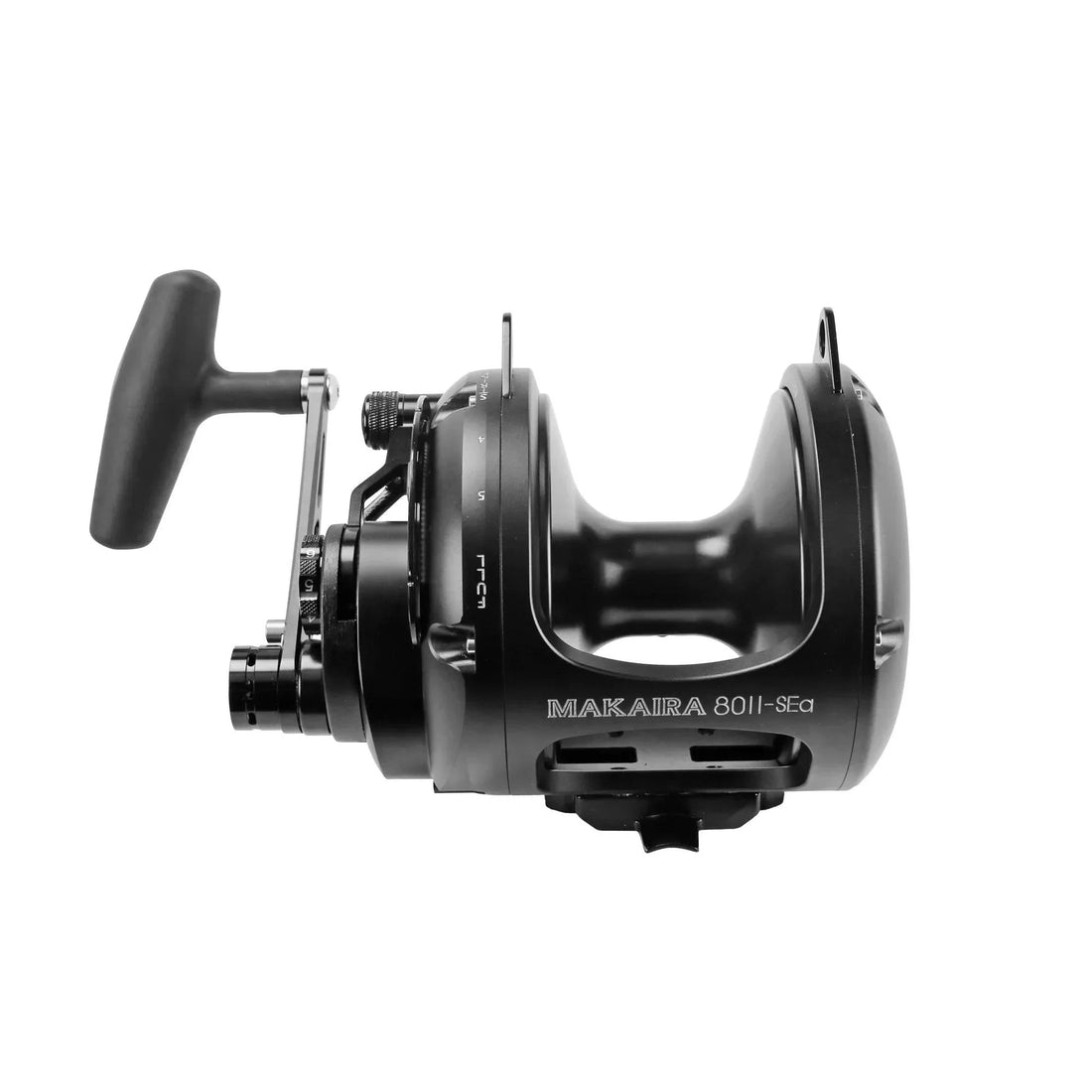
What Goes on a Land Based Shark Fishing Reel
Before the how-to, the recipe. Get this wrong and the spooling technique does not matter.
Backing: 200 lb braid, 85 to 90 percent of the spool. Braid is thin for its strength, so a Makaira LBS holds a serious amount of it. That capacity is the whole reason a land based shark fishing reel exists. A shark that picks up a kayak-dropped bait a few hundred yards out is already a long way from you. Braid gives you the capacity to drop baits that far in the first place, and 200 lb braid lets you run heavy drag so the fight stays short.
Top shot: a short section of heavy monofilament. Mono stretches, braid does not. That stretch is your shock absorber when a big shark surges in the wash and when it throws hard head shakes. It keeps that shock out of the rod and out of the harness instead of driving it straight into you. Mono also takes the sand abrasion that lives in the last stretch of line before the leader, and that is the exact stretch that spends the fight dragging across the bottom. The top shot is short. It is not half the spool. Braid does the heavy lifting on every reel we own.
No straight mono, ever. We do not put straight mono on any of these reels. Mono is thick, so it cuts your capacity in half or worse, and on a long run you will watch the spool get down to the arbor with the fish still going. The Okuma Makaira LBS was built around braid capacity. Use it.
Leader: Terra Firma Tackle. The leader is a separate piece. The top shot ties straight to the swivel on the leader with a five or six turn uni knot, and we run Terra Firma Tackle leaders on every rod. More on that further down.
What each reel holds. Rough working numbers, all running 200 lb braid under a short 250 lb mono top shot. They move a little with the brand of braid and how tight you spool it:
- Makaira LBS 80: about 850 yards.
- Makaira LBS 80W: about 1,200 yards.
- Makaira LBS 130: about 1,500 yards.
That is the whole spec. You can see all three sizes side by side in our Makaira LBS reels collection, or read which size to buy. Now the spooling.
How to Spool a Shark Fishing Reel, Step by Step
Braid gets spooled at home. So does the top shot, almost every time. If we burn a top shot on a trip and have to put a fresh one on, that can happen at the beach, but the braid backing is a home job and it stays that way. This procedure works for the 80, the 80W, and the 130, and most of it applies to any of the big lever drag shark fishing reels in this class. The Makaira LBS 80 has a topless frame, which makes the line-control steps easier, and that was one of the things we asked Okuma for.
Step 1: Set up so the line comes off the filler spool under real tension
You need three things. The reel mounted on a rod. The filler spool of 200 lb braid with a pipe or a length of rebar run through the center so it spins freely. And a real way to put tension on the line.
Here is how we do the tension. Lay a wet towel on the ground, set the filler spool on it with the pipe through the middle, then sit down and put your legs over the pipe so your body weight presses down on the spool. Wet the spool too. The water lets it keep turning under load without heating up and building friction.
What does not work is a buddy holding the filler spool between his palms. Hands do not put enough tension on 200 lb braid. Neither does a spool rolling loose on the ground. Braid stacked on a shark reel without tension is the single most common mistake we see, and it is the one that costs people fish.
Step 2: Anchor the braid to the spool, no tape
Braid is slick. Tied to a bare aluminum spool with a normal knot it can spin under load, which means you crank and the line does not move.
Here is what we do. Double wrap the 200 lb braid around the spool, tie a simple overhand knot, cinch it down tight, and leave the tag end long. Then spool over the tag. The first 20 to 30 revolutions of the spool need the braid you are winding on to lay right over it. After 50 or 60 cranks of the handle going over that tag, give it a hard pull test to be sure the braid will not slip. That is what we do every time.
Plenty of people put a wrap of electrical tape or a strip of mono backing on the aluminum spool instead. We do not agree with it. We do not want tape on our spools, and we do not want to spend time tying mono backing knots when you do not need them. This is what works for us. Use tape or whatever other system you see online if you would rather. We have been shark fishing for twelve years and caught thousands of sharks, and we have never had braid slip on a spool.
Step 3: Fill under heavy, even tension to about 95 percent
Put the reel in low gear. Low gear on a two speed shark reel gives you the torque to hold constant pressure without your forearm giving out, and it lays the line on slower and more evenly. It also puts your hands on every inch of line going onto that reel, so you find a bad spot before a shark finds it for you.
Guide the braid across the spool with a gloved thumb so it stacks level, edge to edge, like laying PVC pipe side by side. No humps in the middle, and no big X crosses from running the line back and forth too fast. Keep the tension heavy the whole time. If you have to stop and rest, that is fine. Hold the line so it does not loosen while you shake out your hand.
Fill until the braid sits about 95 percent of the way to the spool lip and leave the rest for the top shot. Overfill with braid and your top shot ends up rubbing against the frame of the reel, which is not something you want.
Pro tip. Okuma makes a drill adapter called the Makaira Rapid Crank. Okuma lists it for the Makaira 20SEa, the 30SEa, and the 50 and 80 size reels, so check it against your own reel before you buy one. On a reel it fits, run the reel in low gear so you are not over torquing anything, and it saves your hand on the handle. You are still running the line through your fingers on the way in, so you are still checking every inch of braid.
Step 4: Connect the braid to the top shot
There are three connections worth running between 200 lb braid and a mono top shot. A hollow core splice holds the best and runs the cleanest through the guides, and it also takes the longest to build. A PR knot is second on both counts, and it needs a PR bobbin to tie. An FG knot is third on both, and third here is still very high.
We tie the FG. It needs no tools, it goes fast, and it has never failed us. That is the whole reason.
Whatever you tie, wet it, seat it slowly, and test it hard. This knot lives at the point in the fight where the shark is close, the wave is loading the line, and everything is at its heaviest. It does not get to be the weak link.
Step 5: Load the top shot and finish
The top shot does not need the heavy load the braid got. Light to medium tension is plenty. That line is about to get kayaked straight back out anyway.
Run the mono on until the spool is full. We take ours all the way to the top. Leave a little room if you would rather.
Tie the top shot straight to the swivel on your shark leader with a uni knot, five or six turns. That is the reel ready to fish.
Help Spooling a New Shark Reel: The Questions We Get Most
How much braid the Makaira LBS holds
Here is an estimate of what we get on the reels we run out of the Makaira Shark Series lineup, all with 200 lb braid under a short 250 lb mono top shot. The LBS 80 takes about 850 yards. The LBS 80W takes about 1,200 yards. The LBS 130 takes about 1,500 yards. Braid brand and how tight you spool will move those numbers a little.
The practical answer is that with 200 lb braid filling the spool to about 95 percent before the top shot goes on, you have the line to fish long kayak drops on the Gulf Coast and to survive the first run of a big shark. Which reel fits your exact purpose is a post that is coming soon, so be on the lookout.
Why not fill it all the way with braid
Because braid does not stretch, and at the end of the fight, when the shark is in the wash and the waves are loading the rod, you want stretch. The mono top shot is that stretch. It is also the section that grinds on sand and shell every trip, and it is cheap to replace. Sacrificing a short section of mono every few trips beats sacrificing the top of a full spool of braid.
Why not mono all the way
Capacity. Mono of the strength you need for a big shark is thick, and a spool of it holds a fraction of what the same spool holds in braid. We have watched people get spooled by a shark that was not even that large. No straight mono on these reels, ever.
Whether to spool in high or low gear
Low. The Makaira LBS is a two speed shark reel and low gear is there for grinding under load. Spooling is a grind under load. It also lays the line slower, which makes it easier to keep the stack level.
Okuma Makaira LBS Reel Setup After Spooling: Set the Drag at Home
A spooled reel is not a reel ready to fish yet. The last step of any okuma makaira lbs reel setup is the drag, and you set it at home with a scale, not on the beach by feel.
Run the mono through the guides and tie the 250 lb top shot off to a crane scale. The one we like is a 660 lb crane scale off Amazon for thirty to forty dollars. Put the lever at strike and pull.
A good rule of thumb for strike drag is 25 to 30 percent of the line's breaking strength. We normally set the Makaira LBS series at 35 lb at strike, because we can get around 75 lb at full. Most reels on the market only gain five to ten pounds between strike and full. That is another place the Okuma Shark Series reels stand apart, a manageable strike setting with a very high full setting sitting above it.
That top end matters. A hammerhead deserves 60 to 65 lb of drag through most of the fight so it comes in quick and does not die. Limiting fight time is the best thing you can do for a clean, healthy release on a prohibited shark.
Name the scenario when you set it, because the number is different. Twenty-five pounds of drag might feel like a lot in your hand, and it is almost half of what you need on a big hammerhead. On a cast-out bait from the sand, where the sharks are smaller, we run lighter, in the 15 to 20 lb range, because those fights are short on their own.
When a shark picks up a bait, give it 30 to 45 seconds before you come tight. Then tighten the drag and let the circle hook find home in the corner of the jaw. No jerk-set. If a shark is pulling drag, make sure you are running proper drag. Once you are tight, get it in as fast as you can. Setting strike drag at home is also the right time to work through the rest of the rig, and we teach all of that in more detail at catchmoresharks.com, which is our free shark fishing course and community.
Leader and Hook: Finish the Rig
The top shot ties straight to the swivel on the leader with a five or six turn uni knot. We fish Terra Firma Tackle leaders, and that is the only leader brand you will find on our beach cart. A good leader takes the teeth, the sandpaper skin, and the tail whip that would end the fight if any of it reached the top shot.
The hook is a circle hook, always. A circle hook sets itself in the corner of the jaw when the shark turns and you come tight. That is the hookset that lets us get a shark back in the water fast and swimming. We also smash the barbs flat with a pair of crimpers before a hook ever goes in a bait. A flat barb still holds on heavy drag and it backs out clean, which puts the shark back in the water sooner. We practice safe catch and release shark fishing for conservation, and the circle hook is where that starts.
Or Let Us Spool It for You
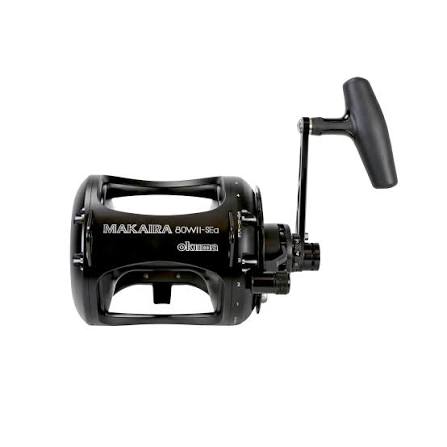
Here is the part Okuma cannot offer and Amazon does not know exists. When you order a Makaira SEa LBS reel from Coastal Worldwide, we can spool the reel for you and set your drag, with a complimentary heavy mono top shot, all done for you. If that is something you want, shop the Ready-to-Rig Shark System here.
